Michelle Hung
PRESENT
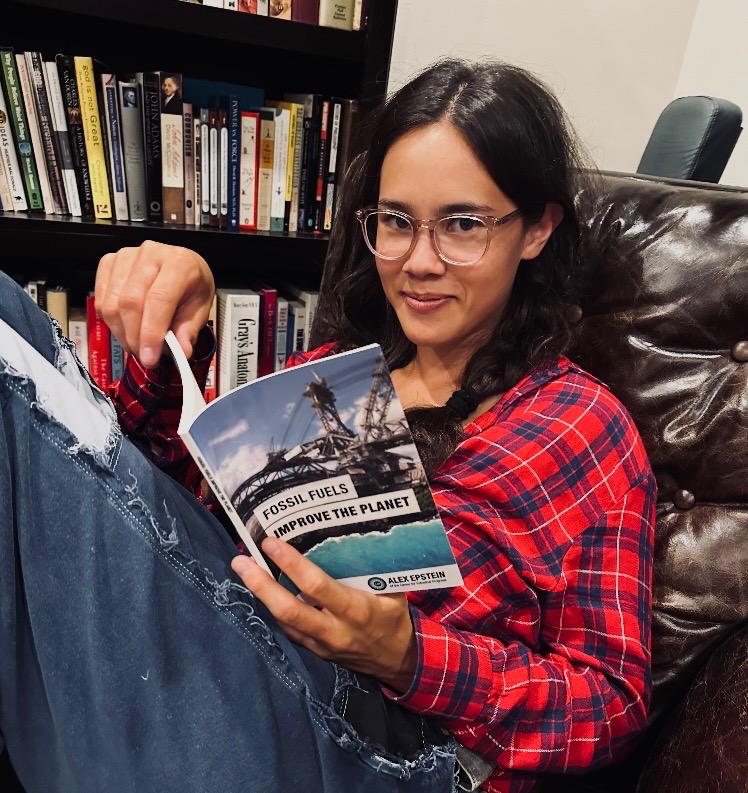
Hi, I’m Michelle! I am the Chief of Staff to philosopher and energy expert Alex Epstein at the Center for Industrial Progress and the Energy Freedom Fund.
I believe that the only moral and practical policy on energy is energy freedom, i.e., where all sources of energy compete on a free market to deliver the most reliable, lowest-cost power.
A fact that blew my mind and led me to start working on this in 2023 is that climate-related deaths have decreased by 98% in the last 100 years as temperatures have risen! This is because we have been (mostly) free to use cost-effective energy (usually fossil fuels) to power machines to keep us safe from climate.
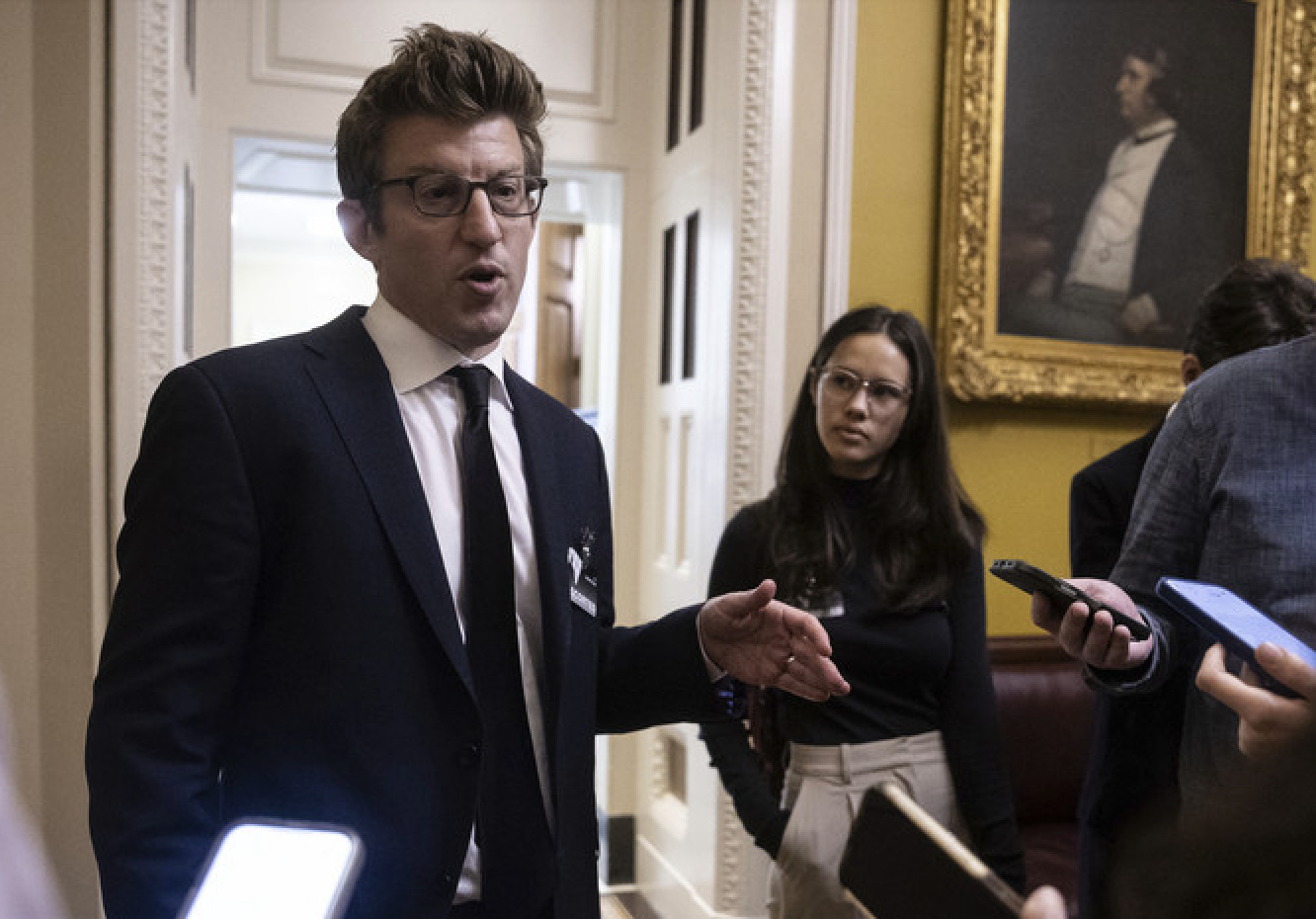
My work involves identifying policies that will unleash energy freedom across different domains, fleshing them out to a high degree of specificity, and then persuading policymakers to adopt them. We are building out a roadmap for how to achieve pro-freedom political change, using energy as a case study.
So far, our work has contributed to considerably more cuts to solar and wind subsidies in Congress's July 2025 budget bill than would have otherwise occurred. Our current focus is on enacting meaningful permitting reform, with the goal of making it far easier to build energy and industrial projects of all types.
PAST

I was born in 2001. I grew up in Orange County, California, where I studied math at the Art of Problem Solving, played board games at Canada/USA Mathcamp, and did a ton of math competitions. I also went to middle school at VanDamme Academy, where I encountered my favorite book, The Fountainhead, for the first time.

I did not enjoy high school, although playing tennis was a highlight. I dropped out a year early to go to MIT, where I initially studied math but switched to cognitive science (the study of how the brain gives rise to the mind) after interning at Saxelab, a cognitive neuroscience lab. I did research there for 5 years, mostly studying how infants’ brains develop.
After my master's I moved to the Japanese countryside to teach high school math. It was beautiful and I loved my students, but my priorities started to shift pretty quickly.
Developing certainty on complex political issues
After Hamas’s Oct 7 attacks on Israel and the ensuing support for the attack on social media from most of my social circle, I decided it was time to develop a real opinion on political issues, starting with this one. So I went deep on the history of Israel.
I learned a lot of new concretes, such as the fact that the vast majority of Palestinian civilians supported the Oct 7 attacks. It was not long before I came to the conclusion that we are witnessing a pretty clear-cut conflict between good and evil, where Israel (a fundamentally free society where people flourish) is the good, and Hamas (a totalitarian theocracy where people are profoundy unfree) is the evil.
I teamed up with my friend Marek to launch Israel Talking Points, where we identify and debunk a central set of myths—false beliefs about the facts and naive moral evaluations of the parties involved—that we believed were driving deep moral confusion about the conflict. We based the concept on Alex Epstein's Energy Talking Points, which Marek was a fan of, and enlisted Alex for valuable advice on thinking and persuasion.
The ITP experience changed my life in a lot of ways. I'd heard for so long from people around me that certainty is virtually impossible to achieve on any given topic. This was never super convincing to me, but this experience proved to me this is absolutely false.
Within a span of weeks, I had gone from knowing almost nothing about the Israeli-Palestinian conflict and having almost no opinion on it, to having what I consider to be a pretty comprehensive understanding of the conflict and a high level of certainty on the basic moral status of all the parties involved and the basic policy towards Hamas that Israel and its allies should take.
I now think the hardest part of certainty is not what people commonly bring up: differentiating between biased and unbiased sources, verifying historical information, making moral evaluations from far away. These are all very doable with clear, rational, and honest thinking and some persistence. The hardest part is psychological.
Someone who vehemently supported the October 7 attacks would have a very psychologically hard time checking their premises and realizing they were 180 degrees wrong. Not because the evidence is unavailable, but because they would have to face the disturbing evasions they had made to reach that position in the first place.
In my case, however, I was starting from a very neutral position, so my process of discovery was actually quite smooth and enjoyable. The hardest part for me was reckoning with the fact that people in my life who were on the opposite side of the issue from me, whom I had previously thought were more or less honest, in fact had very little interest in listening to my point of view.
Getting into energy and climate
After this fulfilling run-in with a complex political issue, I was inspired to start learning about other issues. I became curious about energy and climate for the same reason I had been drawn to the Israel issue: it was a heavily discussed topic dominated (in my circles) by an extremely vocal and passionate minority whose core argument never quite added up to me, but against which I'd also not heard a satisfying rebuttal.
At that time, Alex had just given a speech at African Energy Week, where he called for African nations to withdraw from the Paris Agreement. He argued that Africans need fossil fuels to prosper because every prosperous country has developed using fossil fuels, which cannot be replaced anytime soon by solar and wind, and fossil-fueled development is not causing a climate crisis but rather making the world much safer from climate. He was met with shock and applause from the African audience.
It didn't take much more than that 30 minute speech for Alex to convince me he was fundamentally right on energy and climate. Since then I have consumed hundreds of hours of his content—and all kinds of other supporting and opposing content—and it has confirmed and deepened the understanding I got from that speech.

That is the beauty of capitalism-enabled extreme specialization. Alex spent 17 years carefully coming to his conclusions and refining exactly how to communicate them objectively—to the point where I could grasp and validate the essence within a day. After that, I decided I needed to work with Alex, and that's what I did.
Moving back to the US also had the benefit of getting to move in with my lovely boyfriend, Aaron, whom I'd met at a philosophy conference ~1 week after I'd committed to moving to Japan. We currently live together in San Diego, California.